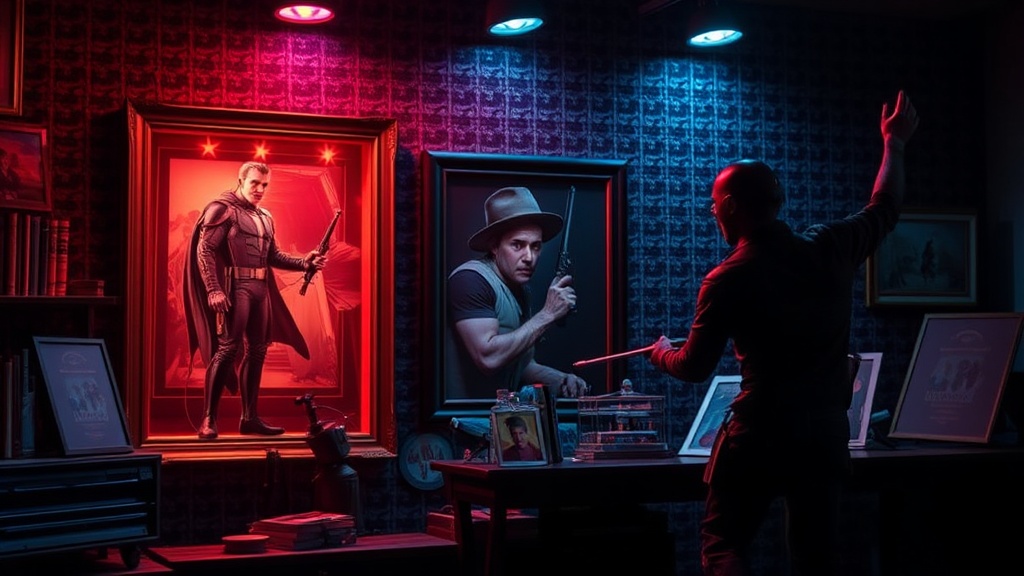
Beyond the Frame: Subtle Threats to Your Prized Movie Collectibles

How does ambient light silently ruin displays?
Many collectors believe that as long as an item isn't in direct sunlight, it's safe. This is a common misconception that can lead to irreversible damage, particularly for paper-based collectibles like movie posters or printed prop schematics. While direct sunlight is undeniably destructive, ambient light—even indirect light from windows or energy-efficient LED bulbs—contains ultraviolet (UV) radiation and visible light spectrums that contribute to degradation over time. Think of it less as a sudden assault and more as a slow, relentless erosion.
UV light breaks down the chemical bonds within organic materials, leading to fading, discoloration, and embrittlement. You might not notice it today, or even next year, but eventually, that vibrant movie poster from your favorite film will look dull, yellowed, and brittle. Even display cases with UV-filtering acrylic aren't entirely foolproof; they merely slow the process. The longer an item is exposed, the more pronounced the damage becomes. It's a cumulative effect, meaning even low levels of light exposure add up significantly over decades.
Consider your home's natural light sources. Is that window across the room casting light on your display shelves for hours each day? Are your display lights always on, bathing your collectibles in a constant glow? Minimizing light exposure, even ambient light, is crucial. For truly sensitive pieces, rotating them out of display into dark, archival storage is a widely accepted museum practice. When displayed, ensure any lighting used is specifically designed for art conservation, typically emitting very little UV or heat. Even better, consider displaying replicas or less valuable pieces in high-traffic, brightly lit areas, reserving the originals for more controlled environments. This isn't about hiding your collection; it's about intelligent preservation.
What common household items pose hidden risks to your collection?
It's easy to focus on external threats like dust and clumsy hands, but often, the most insidious dangers come from seemingly innocuous materials we bring into our homes or use in our displays. The very environments we create to showcase our treasures can inadvertently become their undoing. Acidic materials are perhaps the biggest culprits. Standard cardboard boxes, many types of clear plastic bags, and even some framing mats contain acids that off-gas over time, causing a process known as 'acid migration' or 'acid burn.' This literally stains and degrades any material it touches, leaving an irreversible brown or yellow mark. This is particularly problematic for paper collectibles, but plastics and even some metals can suffer.
Beyond that, humidity and temperature fluctuations are silent assassins. Attics, basements, and garages—often chosen for overflow storage—are typically the worst places for collectibles due to extreme swings in environmental conditions. High humidity can encourage mold growth, warp paper and wood, and corrode metals. Low humidity can make paper brittle and cause plastics to crack. Rapid temperature changes cause materials to expand and contract, leading to stress and eventual breakage, especially in multi-material items like prop replicas. Aim for stable, moderate conditions: a temperature between 60-75°F (15-24°C) and relative humidity between 45-55% is generally ideal for most mixed media collections. A simple hygrometer/thermometer can help you monitor these conditions.
Then there are the less obvious chemical reactions. Cleaning products, aerosol sprays, and even the fumes from fresh paint or new carpets can release volatile organic compounds (VOCs) that damage delicate materials. Always allow new furnishings or renovations to air out thoroughly before introducing sensitive collectibles. When cleaning display areas, use only mild, unscented, and non-abrasive cleaners, and ensure the area is well-ventilated. The principle here is simple: if it smells strong, it’s probably off-gassing something that isn't good for your valuable items.
Are your storage solutions accelerating damage rather than preventing it?
Many collectors invest in storage, but not always the right kind. The intention is good—to protect items from dust and physical harm—but poorly chosen materials can do more harm than good. For instance, putting a vintage movie poster into a standard poster frame from a department store often means it's encased against a highly acidic cardboard backing, with no UV protection from the glazing. The poster might look great for a while, but it's slowly being destroyed from the inside out and the outside in. For paper items, always use archival-grade, acid-free (pH neutral or alkaline buffered) materials for backing boards, matting, and sleeves. Look for products certified by conservation organizations. A good resource for understanding these standards is the